Getting views to a photography website that focuses purely on images is really hard!
Beautiful photographs alone are not enough to attract (lots of) traffic from Google or AI tools. If your website doesn’t help someone solve a problem, answer a question, or spark an idea, it’s unlikely to be found.
In simple terms: your website needs words. Lots of them!
Pretty pictures alone don’t work
Search engines and AI tools are built around questions and intent. People aren’t searching for “nice photos”. They’re searching for answers, reassurance, inspiration, and opinions.
Google SEO still matters. If anything, AI has made it more important. AI tools answer questions using written content. They don’t browse minimalist galleries or admire your composition.
A photography website with no meaningful text gives search engines and AI absolutely nothing to work with.
Use words to support your images
Document your photography journey. Share your thoughts. Explain why you took an image, what worked, what didn’t, and what you learned.
Google actively looks for real-world experience, and the only way to communicate that experience is through words. Your photographs then support the story, not replace it.
- Add context under your images: where it was taken, why you were drawn to it, what you struggled with
- Write short reflections instead of long essays if writing feels hard
- Use your images as examples inside blog posts, not as standalone pages
A single image with a strong story behind it is far more valuable than a gallery of unexplained photos.
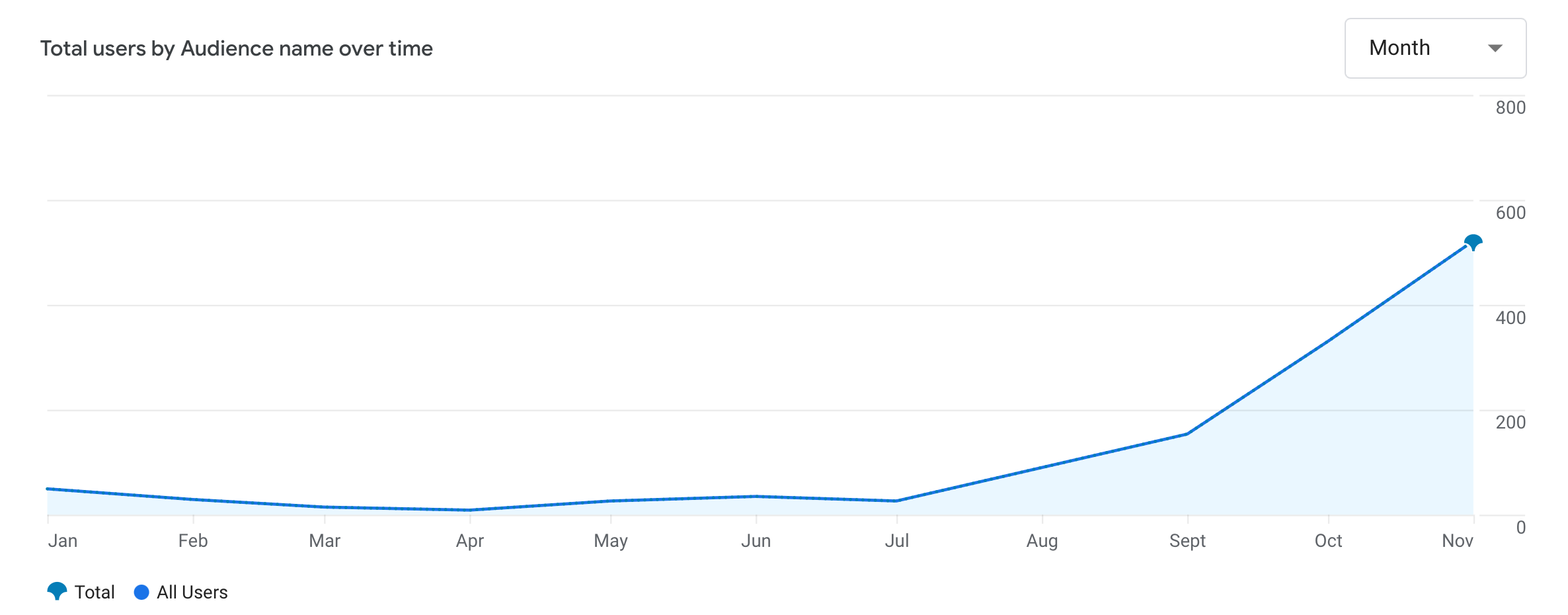
Have a look at my stats from this website. Initially, I built a few pages, added images, but then around May-June, I doubled down on blogging and pretty quickly traffic started to increase.
This website has no commercial intent, it’s just a blog. There won’t be adverts or any other annoying popups. Just my own personal playground.
Minimalist websites only work once you already have an audience
Minimalist photography websites look great, but they rarely work for beginners.
Look at Michael Kenna’s website which is rather minimalistic. However, he’s published lots of amazing books and is quite famous.
If you don’t already have traffic, a following, or brand recognition, a minimalist site has no way to attract visitors on its own. The only way people will find it is if you actively drive traffic via social media, ads, or referrals (i.e. a link in a newsletter).
Well-known photographers and long-established brands can afford this approach because they already have authority. When you’re starting out, your website needs to earn this authority.
- Start with a blog-first website structure, not a gallery-first one
- Make sure every page has a clear purpose beyond “looking good”
- Use galleries inside posts instead of relying on portfolio pages alone
Authority comes from being an “author”
The word authority literally contains the word author.
Be an author. Write.
Don’t be scared of blogging. Your first ten blog posts will probably be rubbish, just like your first ten photographs were. That’s normal.
You don’t improve by waiting until you feel ready. You improve by publishing.
- Answer questions clients or friends ask you repeatedly
- Talk about mistakes you made early on and what you learned
- Explain why a shoot didn’t work and what you’d do differently
- Given an opinion on gear, editing styles, or trends
- Talk about what you would do if you were starting photography again today
Write for humans first, search engines second
SEO doesn’t mean stuffing keywords everywhere or writing like a robot.
It means answering real questions in a clear way.
If you write something genuinely useful, Google and AI tools can usually figure out where it fits.
- Write how you speak, then tidy it up
- Use clear headings so people can skim your text
- Aim to help one specific person per post, not everyone
One good post beats ten empty galleries
A single helpful blog post can bring traffic for years.
Ten galleries with no context usually bring nothing.
Photography websites grow slowly, but they grow consistently when you build a library of useful content. Each post is another door into your site.
Why I still blog about photography
I was a wedding photographer for almost 20 years. Now photography is a hobby again.
I blog about my thoughts, answer questions I hear repeatedly, and occasionally write about things that are a bit controversial. That content is starting to attract traffic because it’s useful, opinionated, and based on real experience.
I have zero commercial intention with the site. It exists to share images, thoughts, and experiences. If it inspires someone to pick up a camera or think differently about photography, that’s a win 😁
So what should you do with your photography website?
First, decide if you want to make money from it. If photography is still a hobby, please read this before turning a beloved hobby into a business.
If you have plans to turn your hobby into a business, you need to make a business plan. Write down what you want to achieve. Just gathering people (aka followers) doesn’t equate to money in the bank.
- Choose a name (use your own to look professional!)
- Set up social media channels for the main platforms if you want to use them (they’re good for getting people to find out about your work)
- Get busy posting on the networks and on your website
- Once you have a solid foundation of content online (e.g. 30 posts and a few blog posts), you could start running paid ads to your social pages or to your website.
If photography is to remain a hobby, a website is a great “container” for your work. Anyone visiting other than your mum is a bonus, but don’t be disheartened if your traffic numbers are low.
Getting traffic to any website is big business, there’s a whole industry built for this called SEO (Search Engine Optimisation). You can learn the basics on YouTube or on the big SEO tool websites such as ahrefs, Semrush or even Hubspot.