
A short history of the Jupiter 11 4/135
The Jupiter 11 4/135 has its roots in mid-20th-century Soviet optics. Designed and produced by KMZ (Krasnogorsk Mechanical Works) beginning in the 1950s, it was intended as a long-focus portrait lens for rangefinder cameras like the Zorki and Fed, derivatives of the Leica II/III system.
The optical formula of 7 elements in 3 groups traces back to pre-war Carl Zeiss Tessar designs, a proven balance of simplicity, sharpness, and character.
Over decades it became popular well beyond its original mount thanks to adaptability. You can use it with an M42 mount adapter on any modern Nikon F, Canon FD, M42, Sony E.
Its long focal length (approximately 1.2 m), smooth focus, and its nice bokeh give it a timeless appeal that’s far greater than its humble price tag might suggest.
I picked mine up in an auction lot a couple of months ago for under £40. There were actually 2 Jupiter lenses in the box, the Jupiter 11 and the Jupiter 11 A. I haven’t looked at the A version yet.
What makes the Jupiter-11 vintage lens special?
Character and rendering
The Jupiter-11 is not a lens designed for clinical perfection. At 135mm and f/4, it delivers a look that I would describe as gentle and film-like.
I like to shoot “wide open”, so all images below were taken at F4.
Instead of harsh contrast or razor-sharp edges, it offers smooth transitions from focus to blur.
- Creamy, soft bokeh
- Strong subject separation thanks to the long focal length
- A classic analogue feel that prioritises mood over technical precision
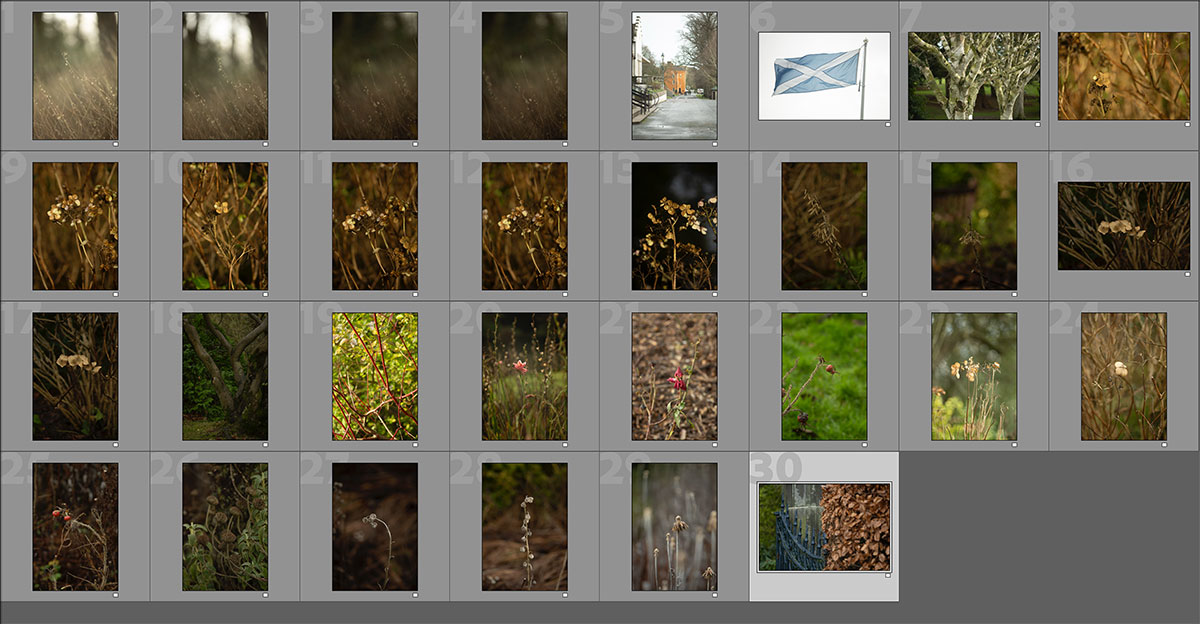
Below is a screenshot of the images I took on a December afternoon in Dunfermline, Scotland, just between the showers. On initial inspection, the images don’t have much “pop”. When you look at the Meyer Optik Domiplan 50 mm F2.8, they were all really colourful and contrasty – straight out of the camera, but this isn’t the case for the Jupiter 11 lens.
All my images are edited though, some more so than others, and I am quite surprised about the sharpness and rendering of the background.
Build and tactile experience
The silver version stands out as a piece of mechanical craftsmanship. Everything about it feels deliberate and solid, from the metal barrel to the smoothly machined rings.
- All-metal construction with a reassuring weight
- Long, smooth focus throw that encourages careful focusing
- A design that makes you slow down and think about composition
No aperture clicks – smooth, stepless control
One of the most distinctive features of many Jupiter-11 lenses is the lack of aperture click-stops. Instead of fixed positions, the aperture ring turns smoothly through the full range.
- This allows very fine exposure adjustments in changing light
- This might also be ideal for video work where smooth exposure changes matter
- This creates a more hands-on, intentional shooting experience
The downside is that it requires a bit more awareness, as the aperture can be moved accidentally. For many photographers, this trade-off is part of the charm.
Why it is still loved today
The Jupiter-11 continues to be popular not because it competes with modern lenses on specifications, but because it offers something different. It adds personality to images and encourages a slower, more thoughtful way of shooting.
- A distinctive vintage look without extreme softness
- Excellent value for photographers exploring classic optics
- A lens that feels as interesting to use as it is to look at
Should you buy it?
The Jupiter-11 4/135 (silver) is more than just an old lens. Its smooth aperture, pleasing rendering, and solid mechanical feel make it an expressive creative tool. For photographers who enjoy character, tactility, and a slightly imperfect but beautiful image, it remains a rewarding lens to use.
You can pick it up for a good price at local auctions or on Ebay.